Crate Digging in KL: Why US Collectors Are Booking Flights Instead of Scrolling Depop

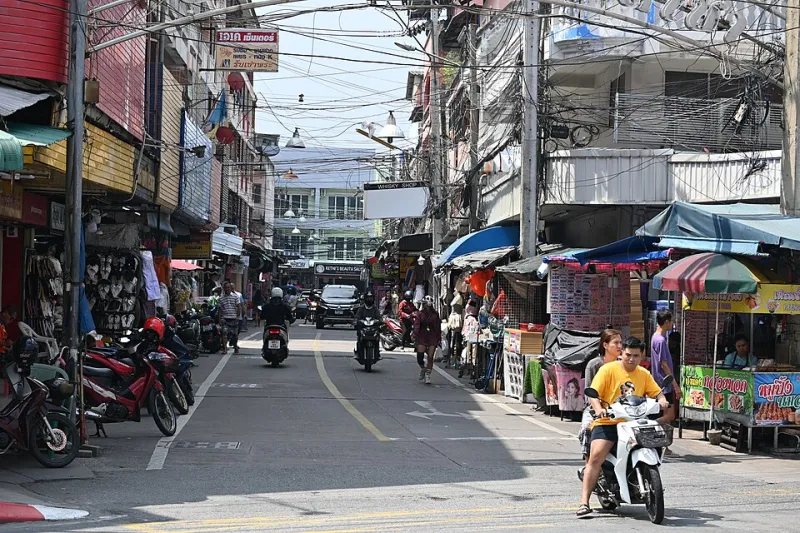
Photo by Photo by Huy Nguyen on Unsplash on Unsplash
Let's be honest about what Depop has become. What started as a scrappy platform for genuine vintage finds has turned into a marketplace where a mid-condition graphic tee from 2009 gets listed at $85 with a shipping delay and a passive-aggressive DM if you try to negotiate. Grailed is better for certain categories, but the same inflationary logic applies. The algorithm surfaces what's already been deemed valuable. Discovery is increasingly rare.
Meanwhile, in the weekend markets of Kuala Lumpur's Chow Kit district, a Bangkok flea pop-up in the Chatuchak overflow zone, or a Jakarta vintage haul event in a converted warehouse, American collectors are finding pieces that would move for triple the price stateside — and they're finding them in person, with their hands, the way it was always supposed to work.
This isn't a travel trend piece. It's a market reality check.
The Economics Make No Sense (Until They Do)
On paper, flying from New York or LA to Southeast Asia to buy used clothes sounds like a terrible financial decision. Round-trip flights, accommodation, the time cost — it adds up. But collectors who've made the trip once tend to make it again, and the math usually works out in ways that surprise people who haven't run it.
Here's why: the secondary market in Southeast Asia operates on a fundamentally different pricing logic than Western platforms. Items aren't priced against what a comparable piece sold for on StockX last month. They're priced based on what the seller paid, what they think is fair, and — critically — what the local market will bear. In markets where average incomes are lower and streetwear collecting is a hobby rather than an investment vehicle, the ceiling is different.
A collector from Chicago who made the trip to KL last year described finding a complete early-2000s Japanese streetwear archive at a Petaling Jaya flea event: "I paid the equivalent of maybe $40 USD total for three pieces that I know, conservatively, would have gone for $200-plus each on any Western platform. And that was after I clearly looked like a tourist and the seller had already adjusted the price upward."
What's Actually Out There
The inventory profile of Southeast Asian vintage markets is genuinely different from what you find in US thrift culture. A few factors drive this.
First, the region was a major manufacturing hub for global fashion brands throughout the 80s, 90s, and 2000s. Deadstock, factory seconds, and employee samples from that era circulate in ways they simply don't in markets where the factories were never present. You find things here that never made it to US retail.
Second, Japan's influence on the region's fashion culture means Japanese archive pieces — brands that command serious premiums in the West — show up with more frequency and less inflated pricing. The collector base that recognizes their full value is smaller locally, which creates a window.
Third, the regional thrift and vintage culture has its own logic. Items that US collectors would immediately flag as grails sometimes sit on a rack for weeks because local buyers have different reference points. That gap is closing fast as the global streetwear internet flattens everything, but it hasn't closed yet.
The Community Is the Product
What no platform can replicate is the social infrastructure around these markets. The serious collectors at KL's flea scene aren't just sellers — they're curators, historians, and community nodes. They know who has what, who's looking for what, and they operate on reputation in ways that Depop's anonymous review system can't approximate.
This community dynamic also creates a different kind of authentication environment. When you buy from someone who's been in the same market for five years and whose entire local reputation depends on not selling fakes, you're operating in a trust network that has real teeth. Compare that to a Depop seller who created their account eight months ago and has 23 reviews.
Bangkok-based reseller and collector Arthit Somboon explains the difference clearly: "Here, if you sell someone a fake, everyone knows by the next weekend. Your spot is gone. Your relationships are gone. The accountability is immediate and personal. No platform enforces that."
The Digital Parallel Universe
It's worth noting that Southeast Asian resale culture does have a digital layer — it's just not where Western collectors are looking. Instagram DMs, LINE group chats, and localized Facebook Marketplace communities handle a significant volume of serious transactions. These aren't indexed by Google in ways that surface to US buyers easily, which means the information asymmetry persists even for people who aren't physically present.
Some US-based collectors have started building relationships with local buyers who can source and ship on their behalf. It works, but it's a slower and less satisfying process than being in the room. The serendipity of a market — the piece you weren't looking for that turns out to be exactly what you needed — doesn't translate to a commissioned search.
A Window That's Closing
This is the part that should matter to anyone sitting on the fence. The conditions that make Southeast Asian resale markets so compelling for outside collectors are not permanent. The global streetwear internet is doing what it always does: surfacing value, creating awareness, and gradually equalizing prices. Local collectors are getting more sophisticated about international comps. Sellers who used to price for their community are now pricing for the world.
The window isn't closed. But it's no longer wide open either. The collectors who made this trip three years ago talk about it the way record diggers talk about Eastern European crate runs in the early 2000s — as a moment that was real, that was good, and that won't last forever in exactly the same form.
Book the flight or don't. But don't say you didn't know the market was there.