Neon, Noise, and Noodles: How the Hawker Stall Became Streetwear's Hottest Muse
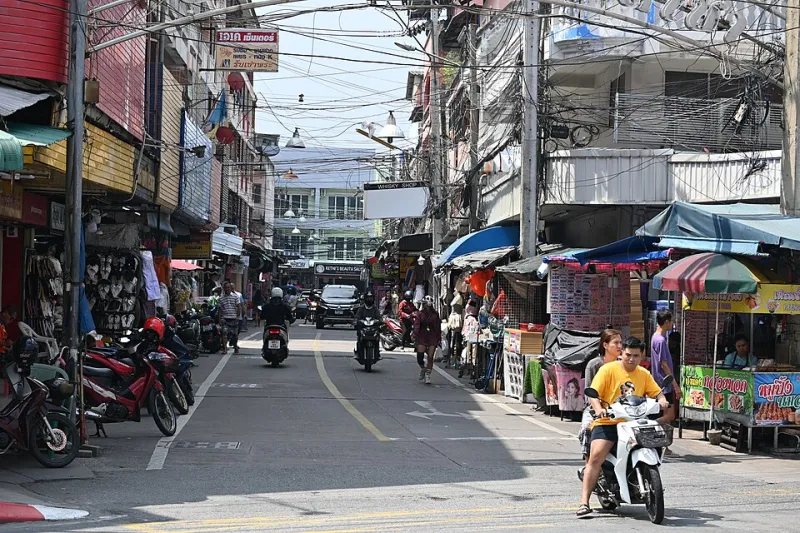
Photo: PattayaPatrol, CC BY-SA 4.0, via Wikimedia Commons
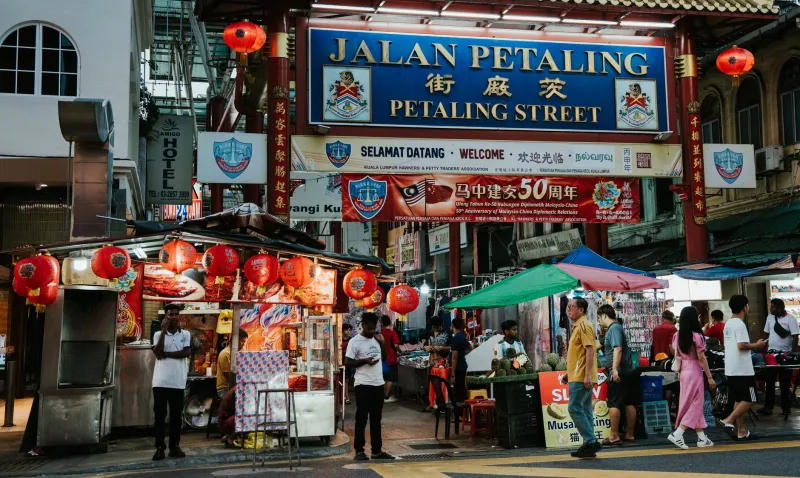
Walk into any hawker centre in Kuala Lumpur, Penang, or Singapore on a Tuesday afternoon and you're already surrounded by more visual information than most mood boards can handle. Overhead, hand-lettered signage competes with flickering LED strips. Plastic chairs in four different shades of red are stacked against walls painted a color that has no official name. The guy running the char kuey teow stall is wearing an apron that's somehow both a warning label and a work of art.
For a long time, Western fashion looked at all of this and saw chaos. Southeast Asian designers looked at it and saw a blueprint.
The Aesthetic That Was Always There
It's not like the hawker stall aesthetic was hiding. It's been the visual backbone of daily life across Malaysia, Thailand, Indonesia, and beyond for generations. The difference now is that a new wave of designers — many of them born in these cities, raised eating laksa on plastic stools — are consciously pulling from that environment and putting it directly into their work.
Kuala Lumpur-based designer Hafiz Razali, who runs the independent label Kedai Kain, describes it plainly: "We grew up in these spaces. The colors, the fonts, the way everything is layered on top of everything else — that's not noise to us. That's home. So of course it ends up in the clothes."
His recent drop featured oversized short-sleeve shirts printed with the kind of bold, blocky typography you'd see on a mamak restaurant's laminated menu. The colorways — deep turmeric yellow, chili red, seafoam green — weren't pulled from a Pantone trend forecast. They were pulled from a plate of nasi lemak.
Why This Hits Different Than Western Maximalism
Here's the thing: Western fashion has dabbled in maximalism plenty. Gucci's Alessandro Michele era made "more is more" into a luxury doctrine. But there's a fundamental difference between maximalism as a deliberate aesthetic choice and maximalism as a lived cultural reality.
The hawker stall look isn't curated. It's accumulated. Signs get added when there's room. Colors are chosen for visibility, not harmony. Utility drives every decision, and beauty emerges as a side effect. That authenticity is exactly what makes it so compelling as a design reference — and exactly why it can't be easily replicated by brands that didn't grow up in it.
Bangkok-based stylist Nattaporn Wisarut has been incorporating hawker-inspired elements into editorial shoots for the past two years. "There's a rawness to it that you can't fake," she says. "When I put a model in front of a real food stall with clashing plastic signage and the lighting is terrible and beautiful at the same time, that image has a weight to it. A studio trying to recreate that just looks like a set."
The Design Details That Are Making It to the Rack
So what does the hawker aesthetic actually look like when it lands on a garment? A few specific elements keep showing up across collections.
Bold, utilitarian typography. Think stencil fonts, hand-painted lettering, the kind of text that's designed to be read from across a crowded market. Designers are pulling this directly onto tees, jackets, and tote bags — not as ironic commentary, but as genuine homage.
Color blocking that doesn't apologize. The hawker stall doesn't ask whether red and orange go together. It just puts them next to each other because both are visible. That same logic is showing up in streetwear colorways that would make a minimalist nervous but look absolutely right in context.
Utilitarian construction details. Chest pockets sized for a phone and a pack of tissues. Reinforced hems. Fabrics chosen for breathability in humid heat, not for drape on a runway. Form follows function, and function here means surviving a Malaysian afternoon.
Plastic and laminate textures. Several labels are experimenting with PVC panels, laminated prints, and glossy finishes that reference the wipe-clean tablecloths and laminated menus of the hawker centre. It sounds niche. On the right piece, it reads as genuinely innovative.
The US Market Is Starting to Pay Attention
For American consumers who've spent years watching Scandinavian minimalism dominate the "elevated basics" conversation, the hawker aesthetic offers something genuinely different. It's not trying to disappear. It's not asking you to invest in a $180 white t-shirt because of its "perfect weight." It's loud, it's specific, and it has a story attached to it that goes deeper than a brand's origin myth.
There's also a practical dimension. The Southeast Asian streetwear market has always operated at price points that make sense for people who aren't buying fashion as a status signal. A hawker-inspired graphic tee from an independent KL label isn't priced like a luxury item because it was never designed to be one. That accessibility is part of the culture it comes from.
Eating With Your Eyes, Dressing With Your Gut
Jakarta-based creative director Dian Pratiwi puts it best: "Food and fashion in Southeast Asia come from the same instinct. You want it to be good, you want it to be real, and you want it to hit you immediately. No waiting, no explanation required."
That immediacy is what the hawker aesthetic brings to streetwear. You don't need a press release to understand a shirt that looks like it belongs in a night market. You just feel it — the same way you feel the first bite of something that's been made the same way for forty years by someone who genuinely loves what they do.
The Western fashion industry has spent decades telling Southeast Asia what sophistication looks like. It's satisfying to watch Southeast Asian designers look back at their own backyard and realize the answer was always there, under fluorescent lights, next to a pile of styrofoam containers and a hand-painted sign that says, simply, "Open."